Most founders don’t think about employment law until it costs them something. At five employees, everyone knows the deal because you hired them personally and the terms lived mostly in conversation. At twenty-five employees, that same informality becomes a liability sitting in your file cabinet, waiting for an exit, a dispute, or a fundraising diligence request to surface it.
It’s a matter of getting a few foundational things right once and building a framework that scales as you hire.
Start With the Offer Letter
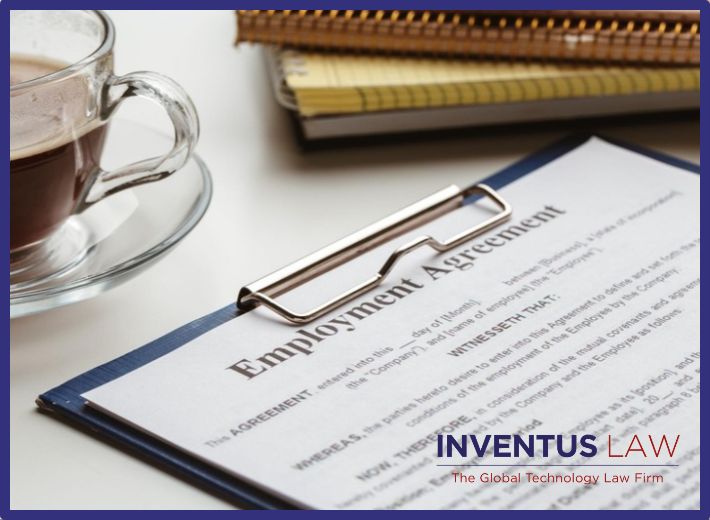
A surprising number of disputes trace back to a document that took ten minutes to write. Beyond stating a salary, a clear offer letter establishes at-will employment, confirms whether the role is exempt or non-exempt from overtime, and sets expectations around equity vesting, start date, and reporting line. When these terms are handled inconsistently across hires, whether through casual email offers or a template that gets edited ad hoc, the gaps tend to surface later around equity and severance, exactly the moments when clarity matters most.
Get Classification Right Before It Compounds
Two classification questions come up constantly as teams grow: employee versus contractor, and exempt versus non-exempt for overtime purposes. Getting either wrong creates a one-time problem that compounds, because the same mistake repeats with every paycheck until someone catches it.
In California, worker classification runs through the “ABC test,” codified in Labor Code §§ 2775–2787. Under that test, a worker is presumed to be an employee unless the hiring company can show three things: the worker is free from the company’s control, the work falls outside the company’s usual business, and the worker is customarily engaged in an independently established trade. The bar is genuinely high, and it’s easy to see why founders trying to move fast end up on the wrong side of it without meaning to. Because employment classifications are governed by state and sometimes local laws, review the requirements for each role and location before making any assumptions. Don’t rely on what worked for another startup: regulations change frequently, and what’s compliant in one place may create risk in another.
Own What Your Team Builds
Every person who touches your product, whether they’re engineers, designers, or even early advisors, should sign an invention assignment and confidentiality agreement before their first day, not sometime after. Skip this step, and you may not actually own the work they did for you, which becomes a very inconvenient discovery during a financing round or an acquisition.
One nuance worth knowing: California law limits how far these agreements can reach. Inventions an employee builds entirely on their own time, without using company resources, generally can’t be swept into the assignment clause. A well-drafted agreement accounts for that carve-out directly rather than trying to claim more than the law allows, which is both the correct approach and the one that holds up better if it’s ever tested.
Know Where Non-Competes Work
Restrictive covenants, non-competes especially, are treated very differently from state to state. California Business and Professions Code § 16600 voids nearly all employee non-compete agreements as a matter of public policy, while plenty of other states allow them under specific conditions. A single agreement drafted for one state’s rules can be unenforceable, or even create liability, the moment you hire someone in a different one. This stops being a theoretical concern the day you make your first remote hire outside your home state.
Build the Multi-State Playbook Before You Need It
Speaking of remote hires: once your team spreads across states, or countries, your company may be subject to employment rules you never planned around. Payroll tax registration, paid leave requirements, expense reimbursement obligations, and termination rules all shift by location. California Labor Code § 2802, for example, requires reimbursing employees for necessary business expenses, including a share of remote work costs like phone and internet.
The founders who handle this well build a repeatable onboarding process the first time they hire outside their home state, rather than solving the same questions from scratch with every new hire in a new place.
Write a Short Handbook
You don’t need a hundred-page policy manual for ten employees. You do need clear, written policies covering the basics: anti-harassment, leave, expense reimbursement, and at-will status. A short handbook protects the company and gives your team a shared, predictable understanding of how things work, which matters more the bigger the team gets.
None of This Should Slow Down Hiring
Get these pieces right once, and they scale with you instead of needing to be rebuilt under pressure later. A standardized offer letter, a classification review for each role, signed invention assignments before day one, state-specific review of any restrictive covenants, and a basic handbook: that’s the full list, and it’s a lot more manageable to build proactively than to reconstruct hire by hire after something has already gone wrong.
The best time to audit your employment practices is before a fundraise, an exit, or a dispute forces the issue. Contact us at inventuslaw.com/contact or email info@inventuslaw.com.
This article is for general informational purposes only and does not constitute legal advice. Employment law varies significantly by state and country. For guidance specific to your team, please schedule a consultation with one of our attorneys.