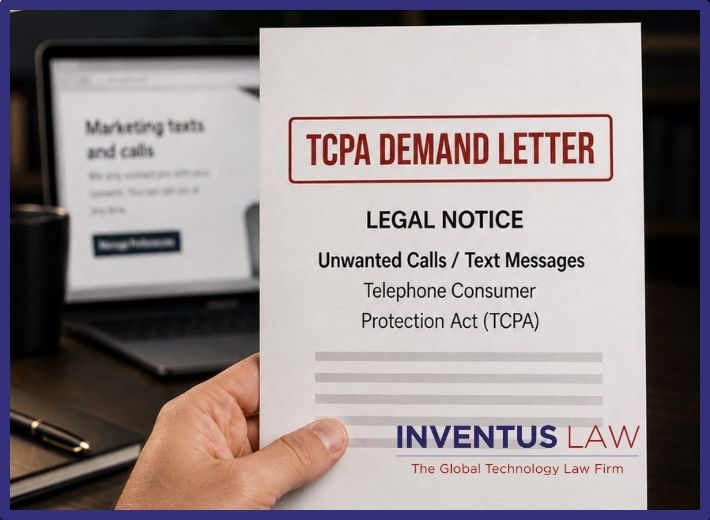
A demand letter citing the Telephone Consumer Protection Act can look alarming because the numbers are real. If your business has received one, whether it’s a formal letter, a settlement email, or a filed complaint, how you respond in the first few days matters as much as how you respond over the following months.
What Is a TCPA Claim?
The TCPA restricts unsolicited calls and texts, prerecorded or artificial voice messages, and communications to numbers on the National Do-Not-Call Registry, generally requiring the recipient’s prior consent before those contacts occur. Claims typically center on one of a few things: a call or text sent without adequate consent, a message sent using an automated dialing system to a wireless number, or continued contact after someone asked to stop. The law doesn’t require the recipient to prove harm. The violation itself is enough.
Why Is Your Business Being Targeted?
Most businesses that receive a TCPA notice didn’t set out to violate anything. The exposure usually traces back to a marketing campaign, a list of purchased leads whose consent wasn’t properly documented, or a third-party vendor sending messages on the business’s behalf without the safeguards it assumed were in place. Worth knowing: the FCC’s one-to-one consent rule, which would have required separate consent for each company rather than a shared lead-list consent, was vacated by the Eleventh Circuit in early 2025. That means older, pre-2023 consent standards currently govern, which is a meaningfully different compliance picture than many businesses assume, and it’s worth confirming which standard your vendors are operating under. Some claims also come from repeat plaintiffs and their counsel, who specifically look for businesses with weak consent documentation and file similar claims against many companies at once.
The Potential Exposure
The TCPA sets statutory damages of $500 per violation, which a court can increase to $1,500 per violation if it finds the conduct was willful or knowing. Courts generally count each call or text as its own violation, not each phone number or customer relationship, so a modest campaign involving a few thousand people without proper consent can create exposure far larger than the campaign itself suggests. No proof of actual harm is required. This is also why these claims are frequently brought as class actions: when the same conduct affects a large group of people, the aggregate exposure can be substantial even where an individual claim would be minor.
Your First Move
In the first day or two after receiving a notice:
Preserve everything. Consent records, campaign logs, vendor contracts, and any records of opt-out requests, since these documents will help resolve the claim, and their absence is often worse than what they’d show. Pause the specific campaign or channel the claim references, rather than your entire marketing operation, until you understand what happened. Notify your insurance carrier promptly, since coverage for these claims often exists but is contingent on timely notice, which is easy to miss under the stress of a first response.
What to Avoid Doing
Don’t respond directly to the claimant or their counsel before counsel has reviewed the notice. An informal reply, even one intended to be conciliatory, can create admissions or foreclose defenses that would otherwise be available. This is true even if you’re confident the claim is baseless. The right response depends on the specific facts, and it’s worth establishing that before anyone from your business says anything in writing.
Defenses Worth Considering
Once past the immediate steps, attention shifts to evaluating what defenses apply, and there are usually more available than businesses expect. Consent is the most common: if the recipient gave prior express consent, or the communication falls under an established business relationship exception, that can resolve the claim outright. Whether opt-out requests were properly honored matters too, since a single missed opt-out can turn one violation into an ongoing pattern. In some cases, the wrong entity was named entirely, particularly where a vendor, franchise, or affiliated company structure is involved, and identifying that early can end a claim quickly. If a vendor’s technology or list practices caused the underlying issue, that vendor’s own contractual responsibility becomes part of the analysis as well.
There’s also a technical defense worth knowing about, given how often TCPA claims turn on the calling technology itself. In 2021, the Supreme Court’s decision in Facebook, Inc. v. Duguid narrowed what actually counts as an “automatic telephone dialing system” under the statute: a system only qualifies if it stores or produces numbers using a random or sequential number generator, not because it can store and dial from a list. A significant share of modern marketing platforms, including many that call from a curated customer list rather than generating numbers randomly, may fall outside that definition entirely, which can be a real defense depending on exactly how your vendor’s system works.Some claims resolve through early, targeted negotiation once the facts and available defenses are established, without ever reaching litigation.
Help From Those Who Know
We evaluate the demand itself, investigate who’s bringing the claim and what pattern it may be part of, coordinate with your vendors and insurers to determine where responsibility sits, and build a response strategy suited to your specific facts, whether that’s an early resolution, a targeted defense, or something in between. The earlier we’re involved after a notice arrives, the more options are typically available.
Received a TCPA demand letter, settlement email, or complaint? Contact Abhilipsa Panda at Inventus Law for an initial assessment: inventuslaw.com/contact or info@inventuslaw.com.
This article is provided for general informational purposes and does not constitute legal advice. Please consult with a licensed attorney regarding your specific circumstances.